
BIOS Setup emulator: http://appro.mit.jyu.fi/tools/biossimu/simu.html#.
This is a BIOS Setup simulator. This runs as a HTML page and this is a very interesting diversion as well as a learning tool. The computers BIOS or Basic Input Output System is stored on a CMOS chip with the settings stored with the power supplied by a small button battery. The ability to practise BIOS setup in a browser is a good way to learn how a computer works. Even though we have better technology now than the days of 486 DX4/100 computers and CRT monitors; we still need a BIOS to store the computer`s settings. There are ways of flashing the BIOS to a new version; that used to involve a floppy disk and a lot of nerves, but now you can use Linux to flash your BIOS. Read this posting and you will learn how this is accomplished. One method is using the GRUB bootloader to load an image to flash your BIOS. I have a ASUS eePC that requires a BIOS upgrade to enable Bluetooth and I am running Linux Mint 12 Debian Edition. I will be trying the tips on the Arch Linux WIKI and I will see how I go with that. Luckily you do not need to worry about the BIOS too much these days; most computers can automatically setup the hardware on boot, especially with the SATA hard drives. Gone are the days of IDE and XT hard disks and the necessity of defining the hard drive parameters in the BIOS before you could format and use your massive 500 Megabyte hard disk to install DOS and Windows 3.11.
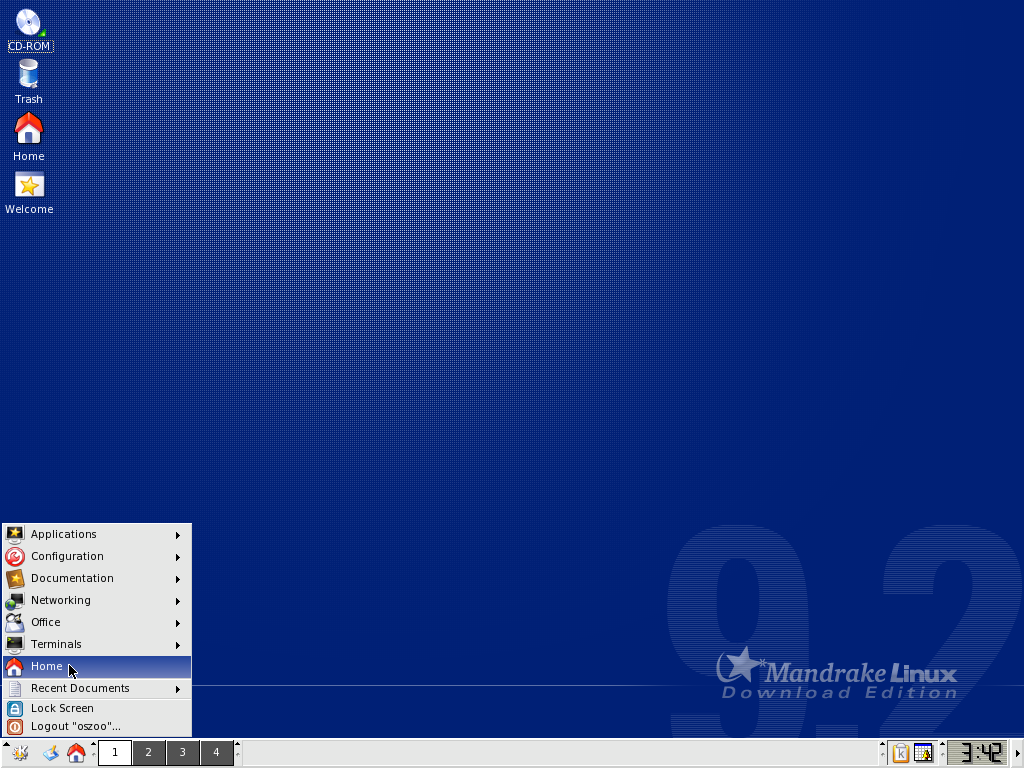
There is also a PC emulator here: belllard.org/jslinux. This is a minimal Linux distribution running in a web page; allowing someone on an Internet cafè computer to practise Linux. You could also install Cygwin on Windows to practise Linux; but a true Linux environment is a better way to learn. I did the majority of my learning with the Mandrake Linux 9.2 distribution. This was a nice fast distribution with some very cool software installed. The KDE desktop environment was very good in the pre 4.0 incarnations. KDE 3.4 was the pinnacle, it is only in the KDE 4.9 release that this desktop is finally becoming a good desktop choice again. The Ubuntu Gnome Remix is an Ubuntu distribution that offers the Gnome Shell desktop as an alternative to the Unity interface. Install this in Ubuntu 12.10 by typing this command.
sudo apt-get install ubuntu-gnome-desktop ubuntu-gnome-default-settings |
If you were not prompted to select the default login manager; type this to choose. The default Gnome login manager GDM offers more features than LightDM and is a better choice for the full Gnome experience.
sudo dpkg-reconfigure gdm |
Install missing Gnome packages by typing this command.
sudo apt-get install gnome-documents gnome-boxes |
Use this command to remove the overlay scrollbars and use the default Gnome scrollbars instead.
sudo apt-get remove overlay-scrollbar* |
To add the proper Gnome PPA and update all of the Gnome packages on Ubuntu 12.10; run this command.
sudo add-apt-repository ppa:gnome3-team/gnome3 |
After all of this you will have a full Gnome desktop environment installed on your Ubuntu system. If you just want to install the Gnome Remix from the CD ISO instead; you may download it here: https://wiki.ubuntu.com/UbuntuGNOME/ReleaseNotes/12.10.